Welcome: TJCHEMI
Language:
 ∷
∷

∷
 ∷
∷
Differences Between Coated and Uncoated Sodium Percarbonate
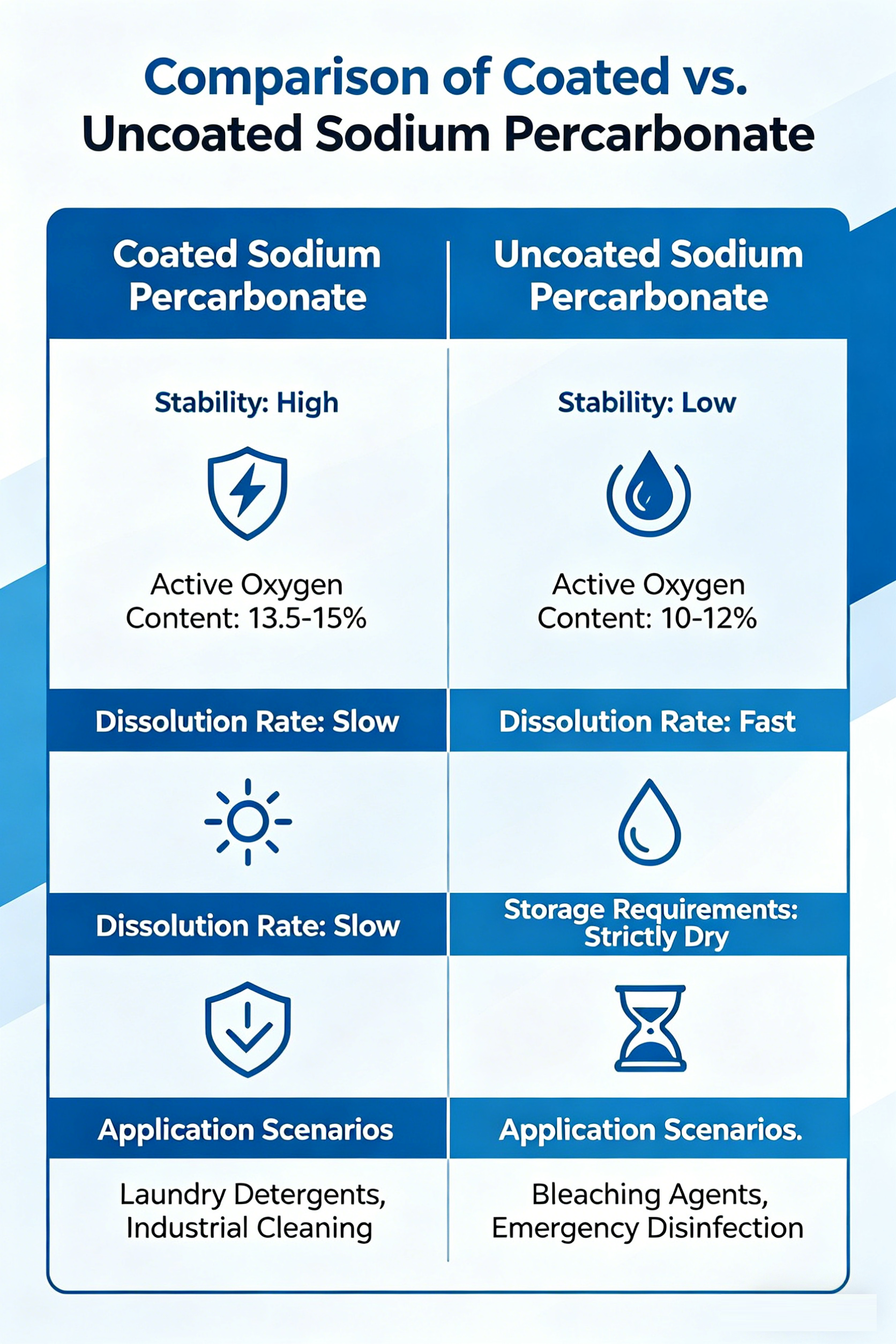
The core difference between coated sodium percarbonate (encapsulated) and uncoated sodium percarbonate (non-encapsulated) lies in stability, dissolution/oxygen release rate, active oxygen content, storage performance and applicable scenarios.
In short: Uncoated = fast reaction, high activity, easy to decompose;Coated = stable, slow release, good storage stability, suitable for compound formulations.
1. Core Structure & Production Process
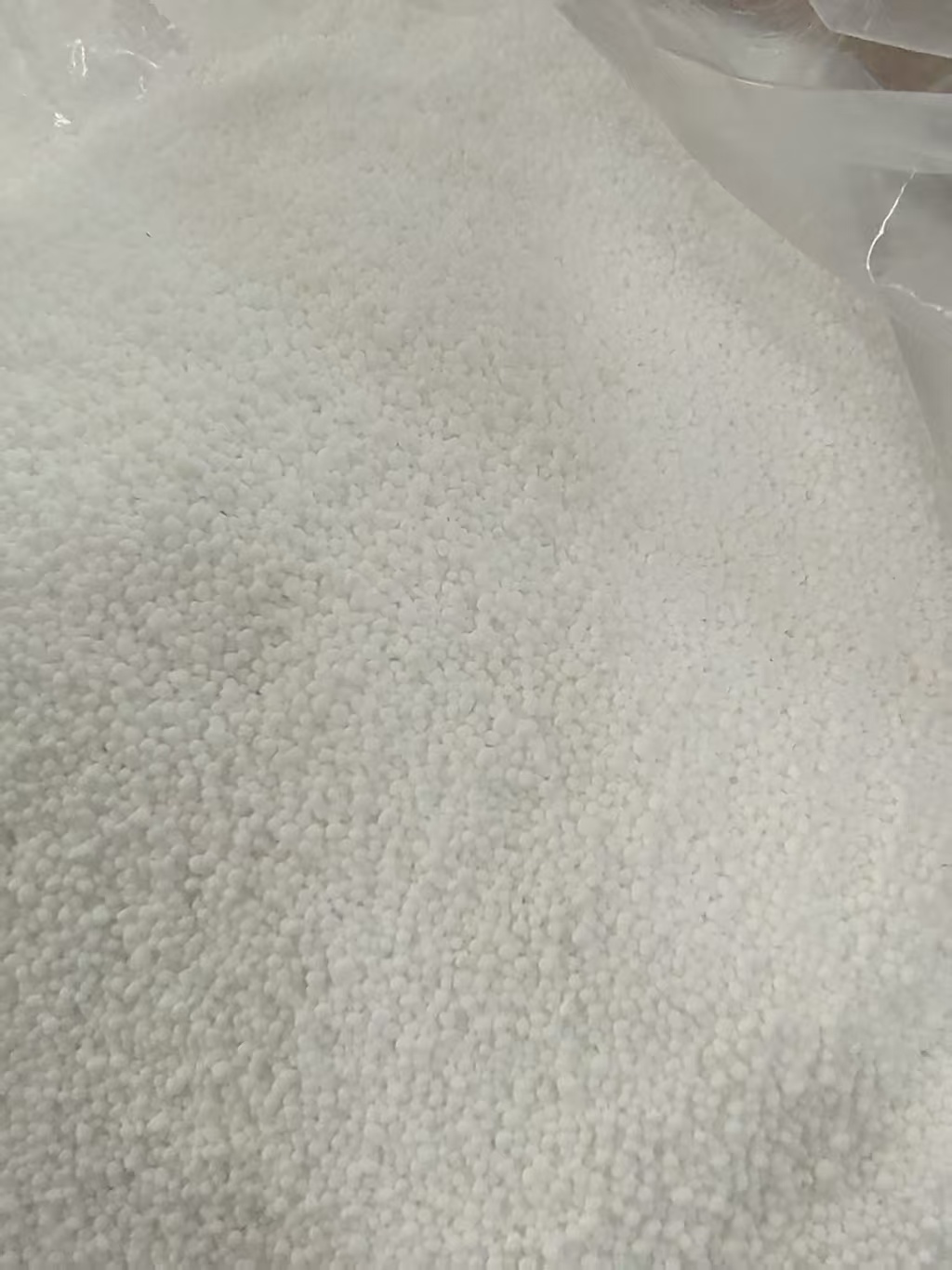
Uncoated Sodium Percarbonate (SPC)Pure sodium percarbonate granules/powder, synthesized and dried only, without any coating layer, as a basic raw material.
Coated Sodium Percarbonate (SPCC)Particles are coated with 1 to multiple layers of protective film (commonly silicate, borate, sulfate, polymer, etc.) via fluidized bed spraying or similar processes.
2. Key Performance Comparison
Comparison Item | Uncoated (SPC) | Coated (SPCC) |
Stability | Poor: highly hygroscopic; easily decomposes prematurely when exposed to heat or surfactants; short shelf life | Excellent: coating isolates moisture and impurities; greatly improved wet & heat stability; shelf life up to 1–2 years |
Active Oxygen Content | Higher (approx. 13.5%+): no coating “dilution”, high purity of active ingredient | Slightly lower (approx. 13.0%+): coating materials account for a small portion of weight |
Dissolution & Oxygen Release | Instant: disintegrates and releases oxygen immediately upon contact with water, instant effect | Controllable: coating dissolves first, then oxygen releases; available as fast-disintegrating or slow-release (releases at medium/high temperature or delayed) |
Compatibility in Formulations | Poor: reacts easily with enzymes, surfactants, fragrances in detergents, causing premature decomposition | Excellent: compatible with formula components, stable for long-term storage |
Storage Requirements | Strict: must be tightly sealed, dry and low-temperature; otherwise caking or deactivation occurs | Relaxed: regular sealed packaging acceptable; anti-caking, good flowability |
Corrosiveness | Fast decomposition, strong alkalinity, easy to corrode metals (e.g. washing machine drums) | Mild contact, slow release, reduced risk of metal corrosion |
Production Cost | Low: simple process | High: additional coating process required |
3. Recommended Applications
Uncoated Sodium Percarbonate
Color bleaching powder, oxygen bleach powder: requiring fast and strong stain removal
Oxygenation agents for aquaculture: immediate oxygen release upon water contact
Industrial instant bleaching: on-site dissolution for immediate use
Coated Sodium Percarbonate
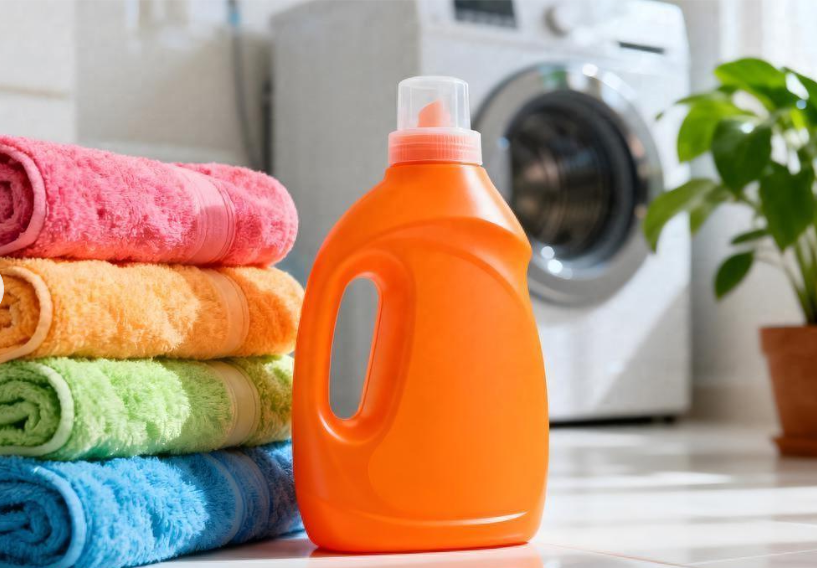
Laundry powder, laundry detergent, dishwasher detergents: long-term stable coexistence with enzymes, surfactants and fragrances
Long-acting cleaning products: machine cleaner, drain opener, effervescent tablets (slow release, long-lasting effect)
Formulations for export / long shelf life: resistant to hot and humid transportation, long shelf life
More detergent waw materials for cleaning and daily chemical products:
1. HPMC, CMC, HEMC, RDP
2. LABSA, SLES, SLS, AOS,CDEA, SDBS, EDTA
3. NP6; NP9; NP10; NP4; NP15; Tween 80; Tween 20
4. STPP, Sodium Metasilicate, Soda ash, Washing powder, sodium sulfate,
5. Propylene glycol, Glycerin, WHITE PETROLEUM JELLY, Benzalkonium chloride,hydrochloric acid, IPA
Any interested, pls contact info@tjchemi.com
4. Quick Selection Guide
For fast action, high efficiency, low cost and immediate use → choose uncoated
For stability, good storage, formula compatibility and equipment protection → choose coated
Contact: Monica
whatsapp:
 Monica
Phone: +8613342014397
Tel: 86-22-25220868
Email: info@tjchemi.com
Add: Tianjin, China